



A Familiar Profile, Refined for 2026
The shaker door has been the default vocabulary of American cabinetry for decades. Its appeal is practical: clean lines, honest construction, and a profile that complements nearly any kitchen, bath, or built-in. But for designers and architects working on contemporary, transitional, and modern-traditional projects, the standard shaker has begun to feel heavy.
- Stiles and rails in the 2 ¼” to 2 ½” range can dominate smaller doors and read as dated next to slab-front or European-influenced cabinetry.
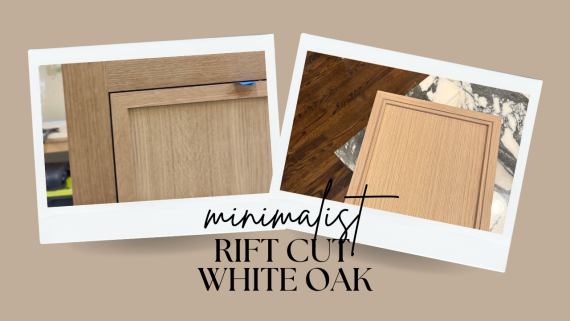
The mini shaker, also called the skinny shaker, slim shaker or micro shaker, solves this. It preserves the recognizable five-piece frame-and-panel construction of a traditional shaker but reduces the stile and rail widths significantly, often to between 1” and 1.5”. The result is a door that feels lighter, more architectural, and distinctly current, while still carrying the craft credibility of a true rail-and-stile profile.
For specifiers, this is the door style that elegantly bridges the gap between a slab door (often too austere for residential warmth) and a traditional shaker (often too chunky for refined modern interiors).
Why This Profile Is Trending?
Three forces are driving demand for mini shaker cabinetry in the design trade right now:
-
The Rift Cut White Oak movement
- Rift cut white oak has dominated high-end residential design for a couple years, and it pairs exceptionally well with narrow-frame doors. The straight, linear grain of rift sawn oak reads beautifully across slim stiles and rails without the visual noise that wider frames can create.
-
European Hinging and Full Overlay construction.
- As more designers spec frameless (European) cabinet boxes with full overlay doors, the mini shaker becomes the natural front choice. Inset shakers showcase the face frame; full overlay shakers showcase the door itself, and a narrower frame keeps the proportions correct on the slim reveal lines that full overlay demands.
-
Architectural Restraint.
- Contemporary kitchens are moving toward calmer surfaces: integrated appliances, hidden pulls, and quieter material palettes. The mini shaker fits this language without abandoning detail entirely.
Material Considerations for Designers
Not every species reads well at this scale. When stiles and rails drop below 1.5 inches, grain pattern becomes a primary visual element rather than a background texture. A few guidelines:
- ✅ Rift cut white oak is the gold standard for this profile. The vertical, consistent grain pattern reinforces the linear geometry of the door.
- ✅ Quarter sawn white oak offers similar linearity with the addition of medullary ray flecking, which can add subtle character without overwhelming the frame.
- ✅ Walnut performs beautifully in mini shaker, particularly in plain-sliced or rift cuts, for darker, more dramatic palettes.
- ✅ Paint-grade maple or poplar is a solid choice for painted applications. Avoid open-grain species under paint at this scale, as the narrow frames will telegraph grain through even high-quality finishes.
- ❌ Cathedral-grain species (plain-sawn red oak, hickory, knotty alder) generally do not suit the profile. The grain competes with the geometry.
Construction Notes That Matter
A few details to confirm with your cabinet shop before specifying:
- Joinery method. Mini shaker frames at 1 inch wide leave very little room for traditional cope-and-stick joinery. Look for a shop using mortise-and-tenon, dowel, or precision CNC joinery rated for narrow-frame applications.
- Panel float. The center panel must be allowed to expand and contract without splitting the narrow frame. Confirm panel groove depth and seasonal allowance.
- Edge profile. Most mini shakers are specified with a square or very slightly eased edge. Heavily profiled edges (ogee, roundover) defeat the purpose of the style.
- Finish wrap. On full overlay applications, the door edges are visible. Confirm that finishing covers all five edges to the same standard as the face.
This profile demands tooling precision and finishing discipline that not every shop is set up to deliver consistently.
👉 Before specifying it on a project with tight tolerances, verify your fabricator’s CNC capability and finishing process.
Where Mini Shaker Works Best
Based on the projects we have seen this profile applied to, it performs strongest in:
- Contemporary and transitional kitchens, particularly with integrated appliance panels
- Primary bathrooms and powder rooms, where the slim frame keeps small vanities from feeling heavy
- Built-ins, bar areas, and home offices, where mixed materials (oak, brass, stone) need a quiet cabinet front
- Mudrooms and laundry rooms paired with full-height doors
- Closet systems and dressing rooms
It works less well in heavily traditional kitchens or projects where the cabinetry is meant to read as historically referenced. In those cases, a standard shaker remains the appropriate choice.
Working with Wainscot Solutions on Mini Shaker Projects
Wainscot Solutions in New Milford CT offers mini, skinny, and micro shaker doors as part of our standard custom cabinetry and millwork product. In-house CNC fabrication, in-house finishing, and direct shop oversight by ownership allow us to hold the tolerances this profile requires across full kitchen and built-in scopes.
We work with designers, architects, and builders across Fairfield County, CT Litchfield County, CT Westchester County, NY and the broader tri-state area, as a primary fabricator and as an overflow resource for trade partners with existing shop relationships.
If you are specifying a project that calls for a mini shaker profile in rift cut white oak, walnut, painted maple, or another species, we would welcome a conversation about whether we are the right fit for the work!
📞 Book a discovery call: Schedule a 20-minute call with our owner, Michael Yedowitz to discuss your project or reach us directly at 860-491-0346 or admin@wainscotsolutions.com.